Lund history: from medieval city to university town
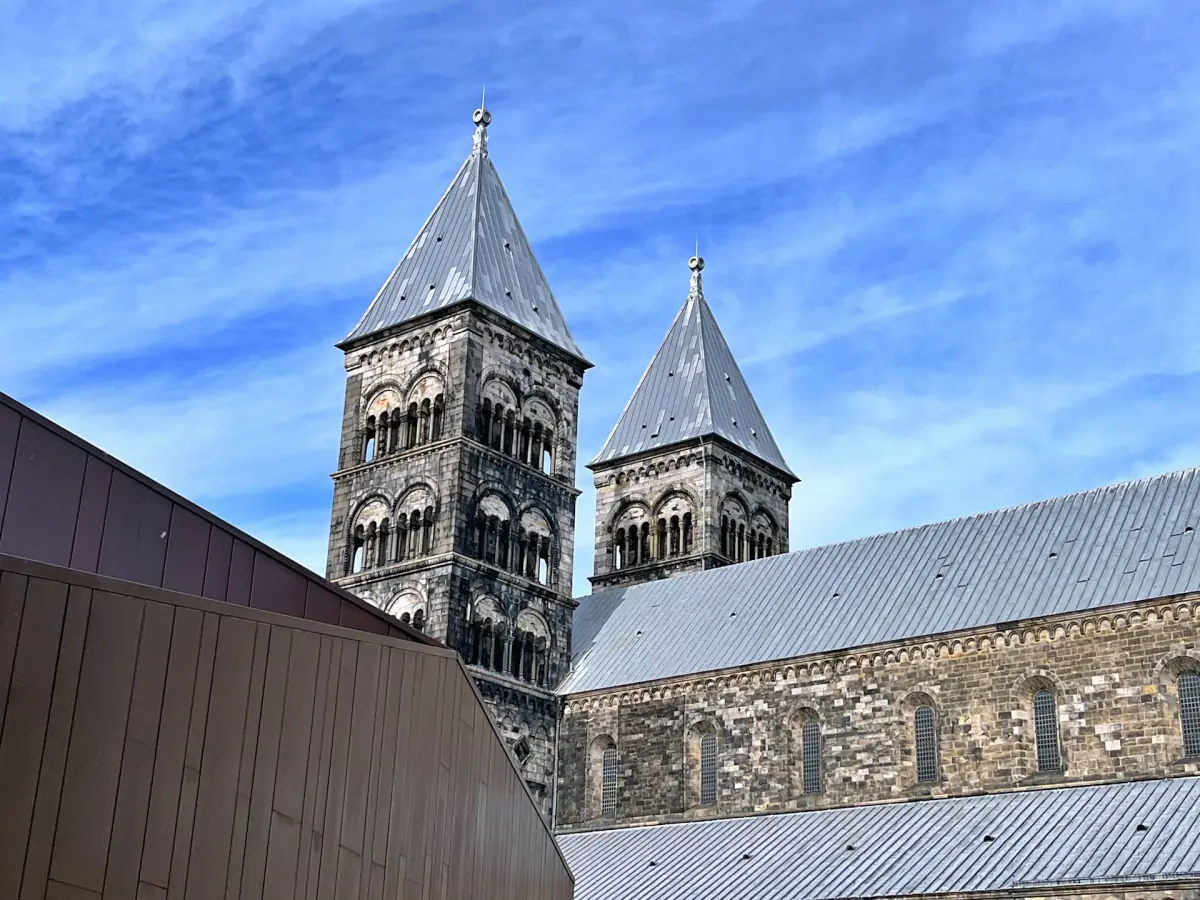
Lund history begins around 990, rather than with a precisely dated foundation ceremony. The city became an archiepiscopal seat in 1103, and its Romanesque cathedral was completed in 1145. These dates explain why a visit centred on the cathedral and neighbouring streets gives such a strong introduction to the city. Begin with the church, then continue into Lundagård to see how the university became part of the same central landscape. Use the Lund sightseeing guide to turn the city’s history into a walking route through its visitor sights.
The political and academic milestones belong to different moments. Lund and Skåne became Swedish following the Peace of Roskilde in 1658. The university was founded in 1666 and formally opened in the cathedral in 1668. Keeping that sequence in mind makes the walk more than a collection of attractive buildings: the religious centre preceded the university, while the university developed after the change of sovereignty.

Lund Cathedral and the crypt
Individual visits to Lund Cathedral are free. Treat it as a working church as well as a historic building: sightseeing pauses during services. A practical order is to look at the exterior first, enter when worship permits, and leave time for the crypt instead of making the whole visit depend on seeing the clock perform. The church and its surroundings can form the centre of an independent visit without buying a cathedral admission ticket.
The crypt is the oldest part of the cathedral. Its first altar was consecrated on 30 June 1123, before the completion of the main church. Sandstone columns and vaulted spaces give this lower level a different character from the building above. The giant Finn belongs to legend; approach the figure as part of the cathedral's storytelling rather than as a portrait of a historical builder. An entrance ramp and staff assistance with the crypt and high-choir lift support access; discuss individual access needs with cathedral staff.
A guided visit to Lund
This private trip includes a guided Lund visit and commentary on local history and culture.
Hand-picked tours, booked through GetYourGuide. Prices are indicative starting prices in euros (as of October 2026). Tap a tour for live availability and the current price in your currency.

A guided introduction to Lund's heritage
The private day trip from Copenhagen includes guided visits to Lund and Malmö, with commentary on local history and culture.
The astronomical clock
The astronomical clock rewards a closer look at its figures even when a performance does not fit the rest of the day. Leave flexibility around the church visit and consult the cathedral's programme for the date. Private photography without flash is permitted outside services, except in the baptismal chapel. This is a useful place to slow down, put the camera away when necessary and give the decoration as much attention as the mechanism.
Lund Old Town
Use the old town streets to connect the church with the university quarter rather than treating each landmark as a separate excursion. Medieval lanes and courtyards also feature in the local private walking route. For a guided walk that starts in Lund, see private walking tours; the heritage day trip from Copenhagen combines guided visits in both cities with transport, free time and historical commentary. These are different ways of structuring a day, so choose according to where the day starts.
Lundagård and the university
The white university main building in Lundagård was inaugurated in 1882 and designed by Helgo Zettervall. Its columns, atria and antique forms offer a different architectural vocabulary from the cathedral. The brick Kungshuset in the same park served as an earlier university main building. Looking at both makes the development of the university visible without relying on access to interiors.
The university's self-guided Lundarundan starts at the Tegnér monument in Lundagård and finishes at the Historical Museum. Its stops include the university library, Skissernas and the botanical garden. Use the route as a guide to places and architecture; arrange individual museum visits around their own opening hours. The Lund overview introduces those additional sights, while seasonal planning helps balance an outdoor walk with museum time.
Architecture beyond the cathedral quarter
Clemenstorget developed in the 1890s as the city expanded northwest of the former city wall. Allhelgonakyrkan was inaugurated in 1891. These later landmarks add another period to a walk that might otherwise stop at medieval church architecture. If arriving by rail, use the station area as the opening chapter and continue towards Lundagård; the arrival guide explains the connections to Lund C.
Uppåkra before Lund
Uppåkra provides a separate introduction to the area's earlier settlement history. Keep it distinct from the present city's street plan. At the archaeological site, an individual walk along the gravel path and entry to the visitor centre are free, while the archaeology centre, guided visits and activities require tickets. Plan a dedicated stop for that earlier chapter rather than expecting it to be included in a Lund city tour.
Questions about Lund's history
Is Lund Cathedral free to visit?
Individual visits are free. Sightseeing pauses during services, so allow flexibility in the order of the walk.
Was the university founded in 1666 or 1668?
It was founded in 1666 and formally opened in the cathedral in 1668.
Is Finn a historical person?
The giant Finn belongs to the cathedral's legends, rather than a historical account of its construction.